
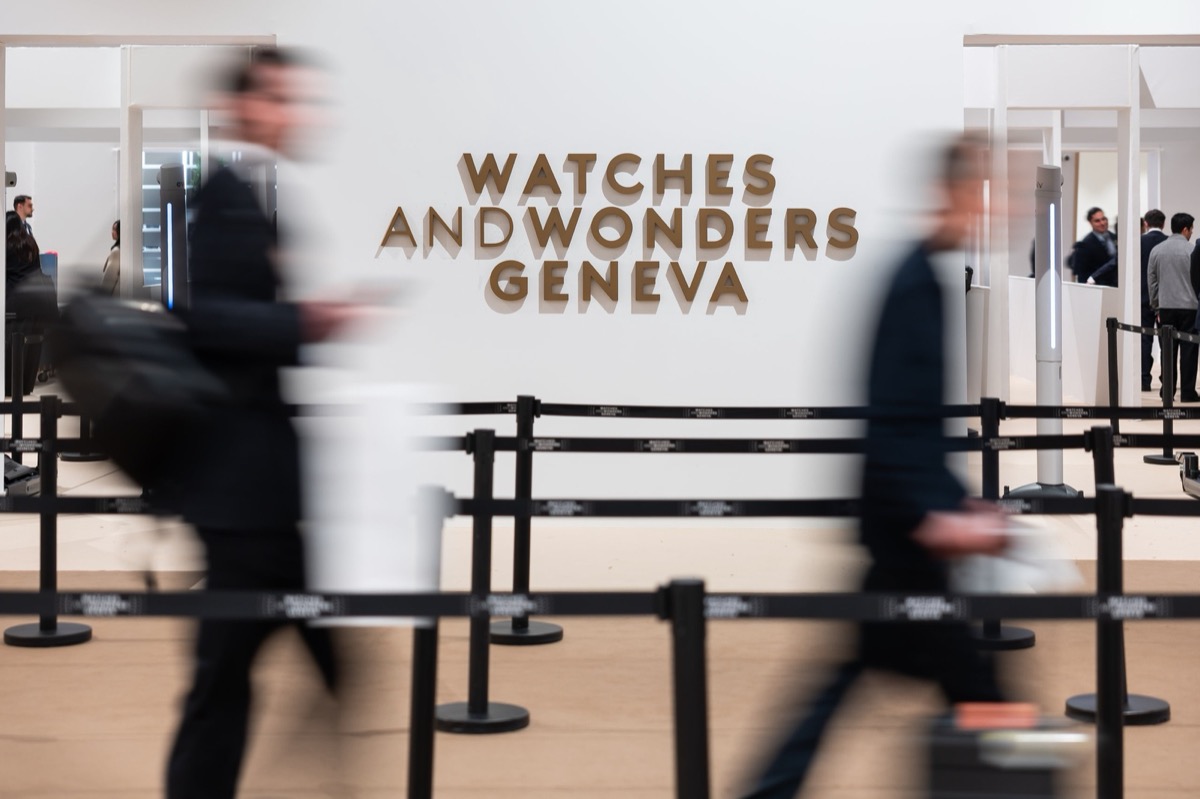
Every April, Geneva becomes the centre of the watch world for a week. Watches and Wonders 2026, the fair’s biggest edition yet, by exhibitor count, arrived against a backdrop of record-high gold prices, a market still recalibrating after years of speculative excess, and brands that responded, by and large, by doing what the watch industry does best: making things that are extraordinarily difficult to make and doing it beautifully. Here is what stood out.

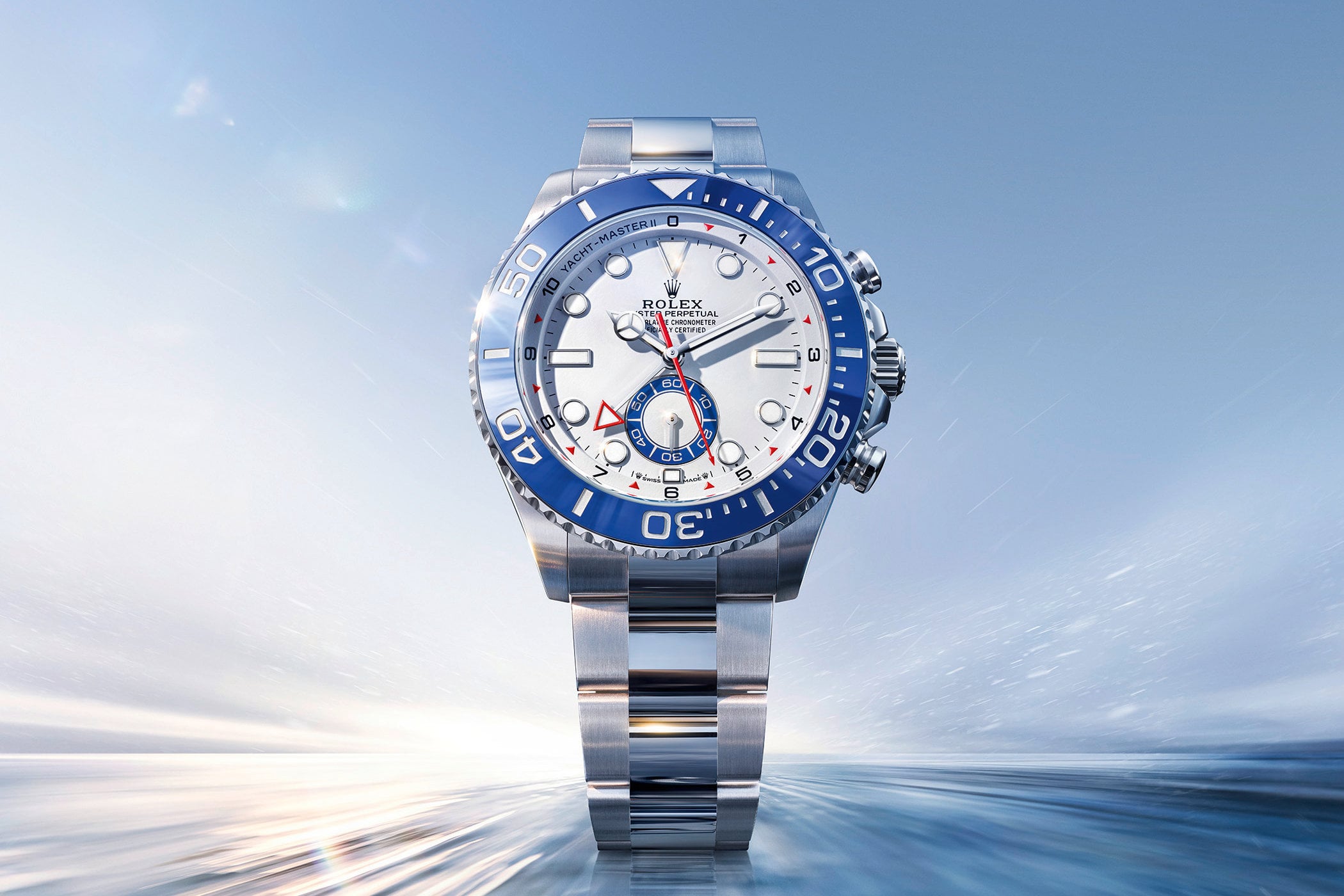
Rolex arrived with a milestone and a machine. This year marks the 100th anniversary of the Oyster case, the hermetically sealed, screw-down crown system that in 1926 made the first genuinely waterproof wristwatch possible and laid the foundation for the entire modern watch industry. They marked it quietly and well: a centenary edition of the Oyster Perpetual with “100 years” inscribed at 6 o’clock in place of the usual Swiss Made text, and a new proprietary alloy called Jubilee Gold, a warm metal sitting between yellow and rose gold, debuted in a Day-Date with a green aventurine dial. Creating a new metal is genuinely rare, something Rolex does perhaps once a decade. The bigger technical announcement, however, was the Yacht-Master II. This is Rolex’s most complicated watch, a regatta chronograph with a programmable 10-minute countdown that a racing crew can synchronise to a start sequence. The original launched in 2007 and hadn’t received a new movement since. For 2026 it gets an entirely new calibre, a redesigned case, a ceramic bezel, and countdown hands that now rotate counterclockwise for faster reading under pressure. It’s the kind of update that quietly resets the standard in a watch that already owned its category. Steel at $20,300; yellow gold at $57,800.
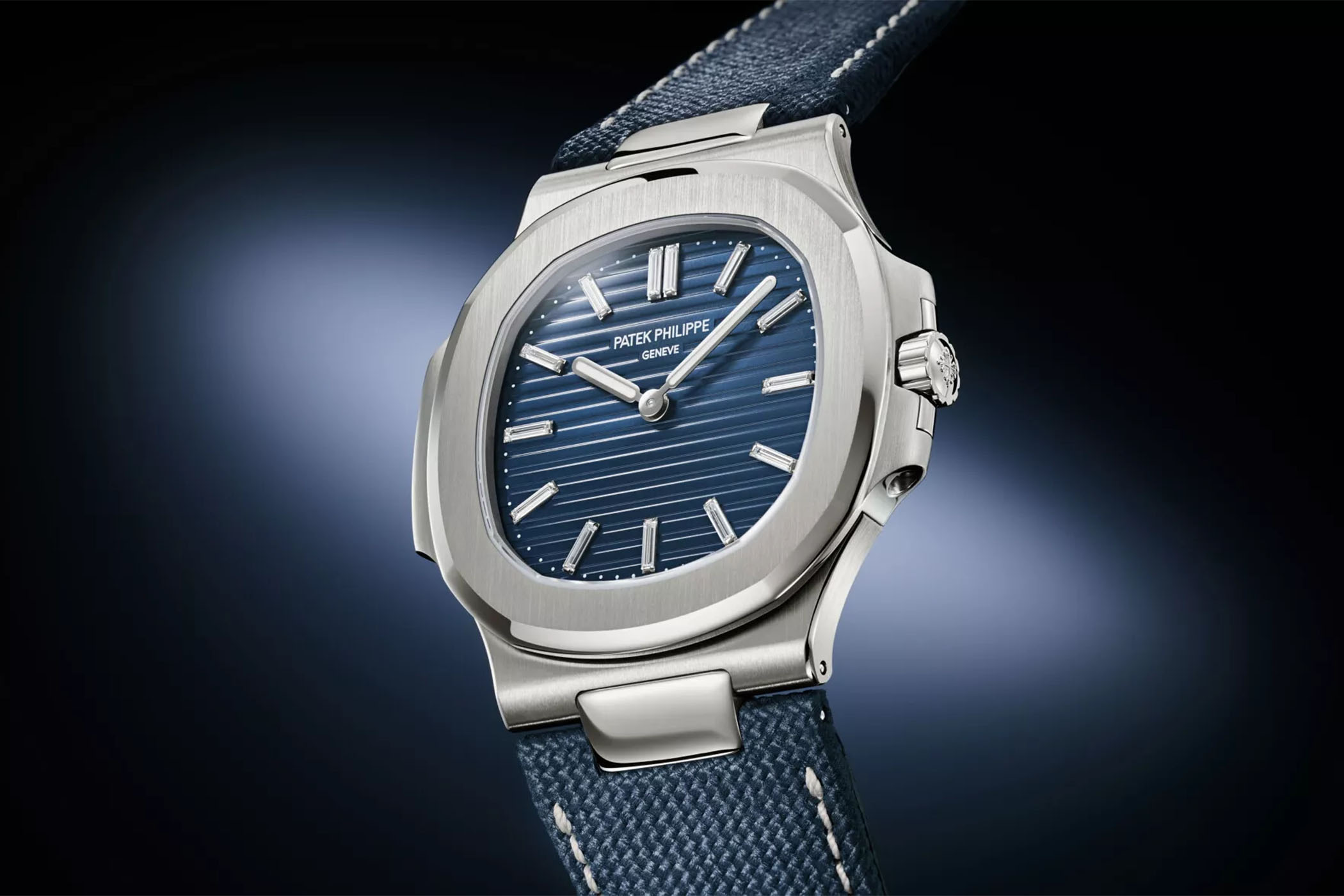
Patek Philippe had two very different stories to tell. The first belongs to history: the Nautilus turns 50 this year. Gérald Genta designed it in 1976, reportedly in a single night, on a napkin. It was a radical idea at the time, a luxury watch in steel, with an integrated bracelet and an octagonal porthole-shaped case, positioned as serious horology rather than dress jewellery. Nobody knew it would become the most coveted sports watch on the planet. For the anniversary, Patek released three limited-edition wristwatches in white gold and platinum, no steel, which Patek retired in 2021, including a 38mm platinum version that returns the watch close to its original proportions, and a Nautilus pocket watch, the first in the model’s history, with an 8-day power reserve. The waiting lists will be longer than most people’s patience.
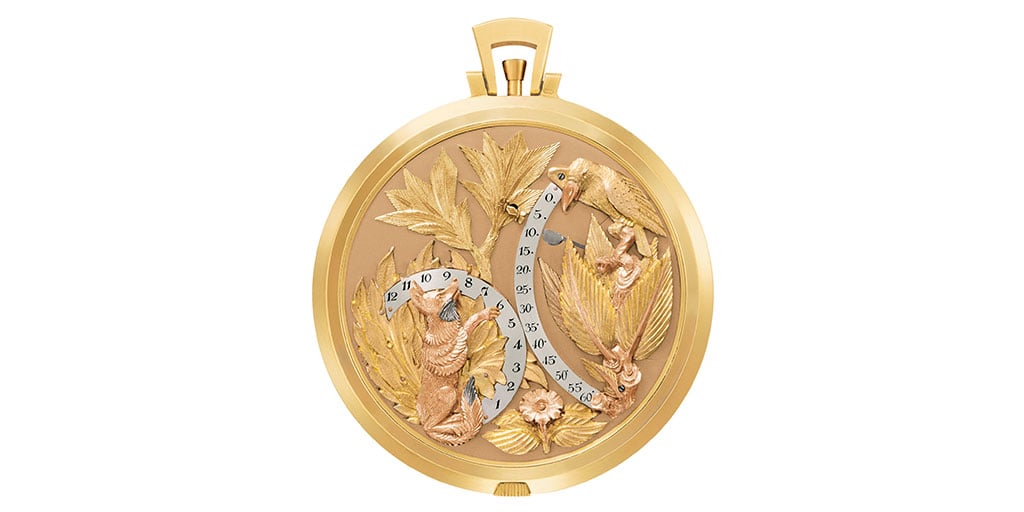
But the piece that stopped people at the Patek booth, and arguably stopped people at the entire fair, was something else entirely. The Ref. 5249R “The Fox and the Crow” is Patek’s first automaton wristwatch in their modern history. Automata, miniature mechanical figures that move, were the great art form of 18th-century watchmaking, the kind of thing made for kings and emperors, now almost entirely extinct as a living craft. Press a pusher on the side of this watch, and a scene from La Fontaine’s fable animates on the dial: the fox moves its paw to point to the hour, while the crow opens its beak and drops a piece of cheese that simultaneously indicates the minutes. The movement draws on a Patek pocket watch from 1958, now in their museum. It took years to develop. It costs CHF 320,000, exists in rose gold, and is, in every sense of the word, a watch as a work of art.
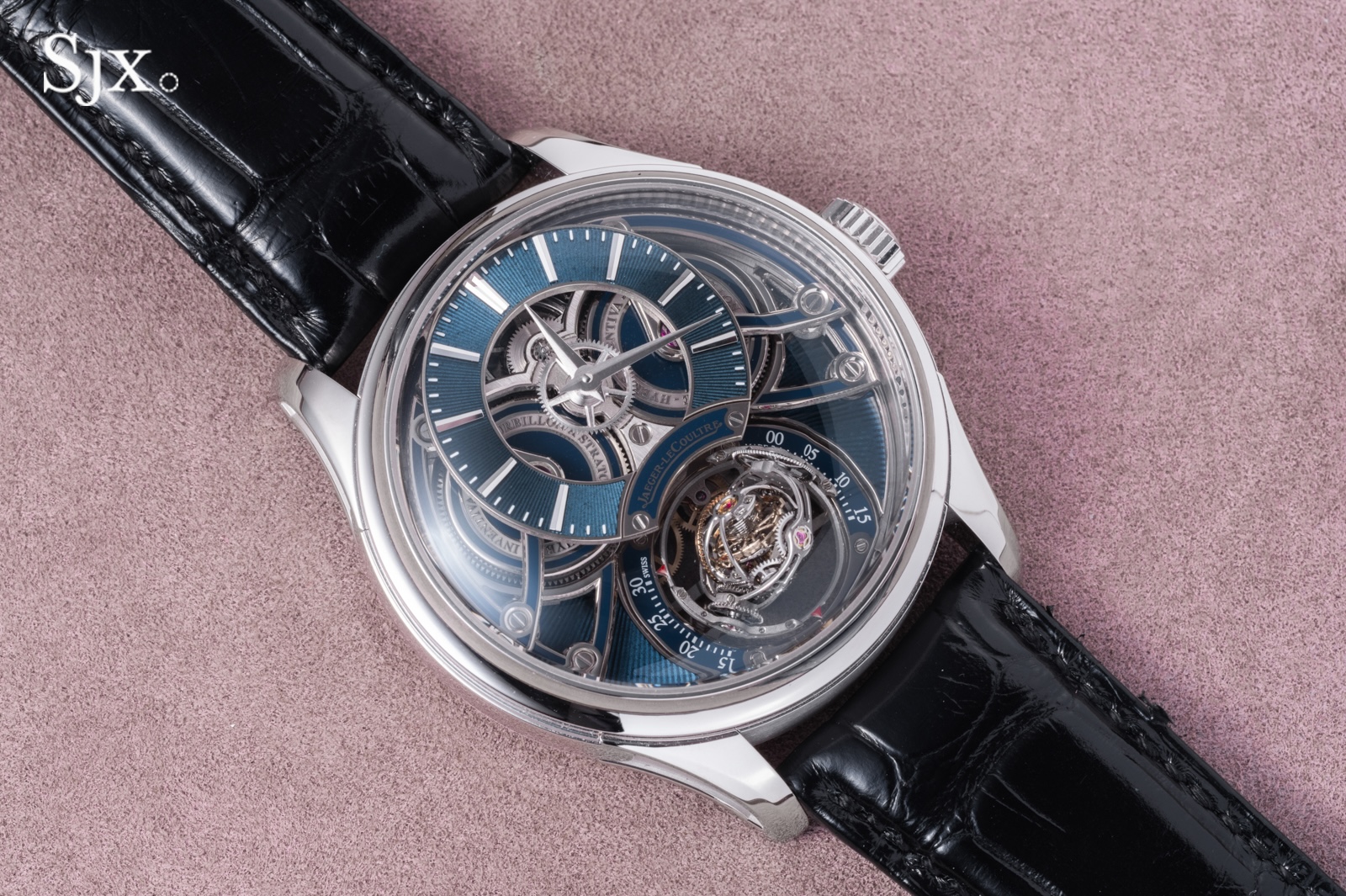
Jaeger-LeCoultre brought two skeleton watches that deserve more attention than they typically receive outside specialist circles. The Gyrotourbillon à Stratosphère is the most technically complex skeleton piece at the entire fair: a fully openworked platinum watch housing a triple-axis tourbillon, three titanium cages rotating at different speeds and inclinations, covering 98% of all possible positions and compensating for gravity in a way that a conventional tourbillon, spinning on a single axis, cannot. The tourbillon alone contains 189 components and weighs 0.78 grams. The bridges are hollowed out and lacquered in deep blue, so the entire movement, visible through both front and caseback sapphire crystals, appears to float inside its platinum shell in three dimensions. Twenty pieces exist. The second piece is technically even more remarkable for what it doesn’t show: the Ultra-Thin Minute Repeater Tourbillon, the world’s thinnest automatic watch combining a minute repeater and a tourbillon, a record JLC has held for years, arrives in a new pink gold edition where three of the structural movement bridges are replaced entirely with transparent sapphire crystal. The result is that all 537 components appear to float without support. It strikes the hours, quarter-hours, and minutes on demand through a sapphire gong acoustically isolated from the case. Ten pieces. Price undisclosed, but likely approaching £700,000.
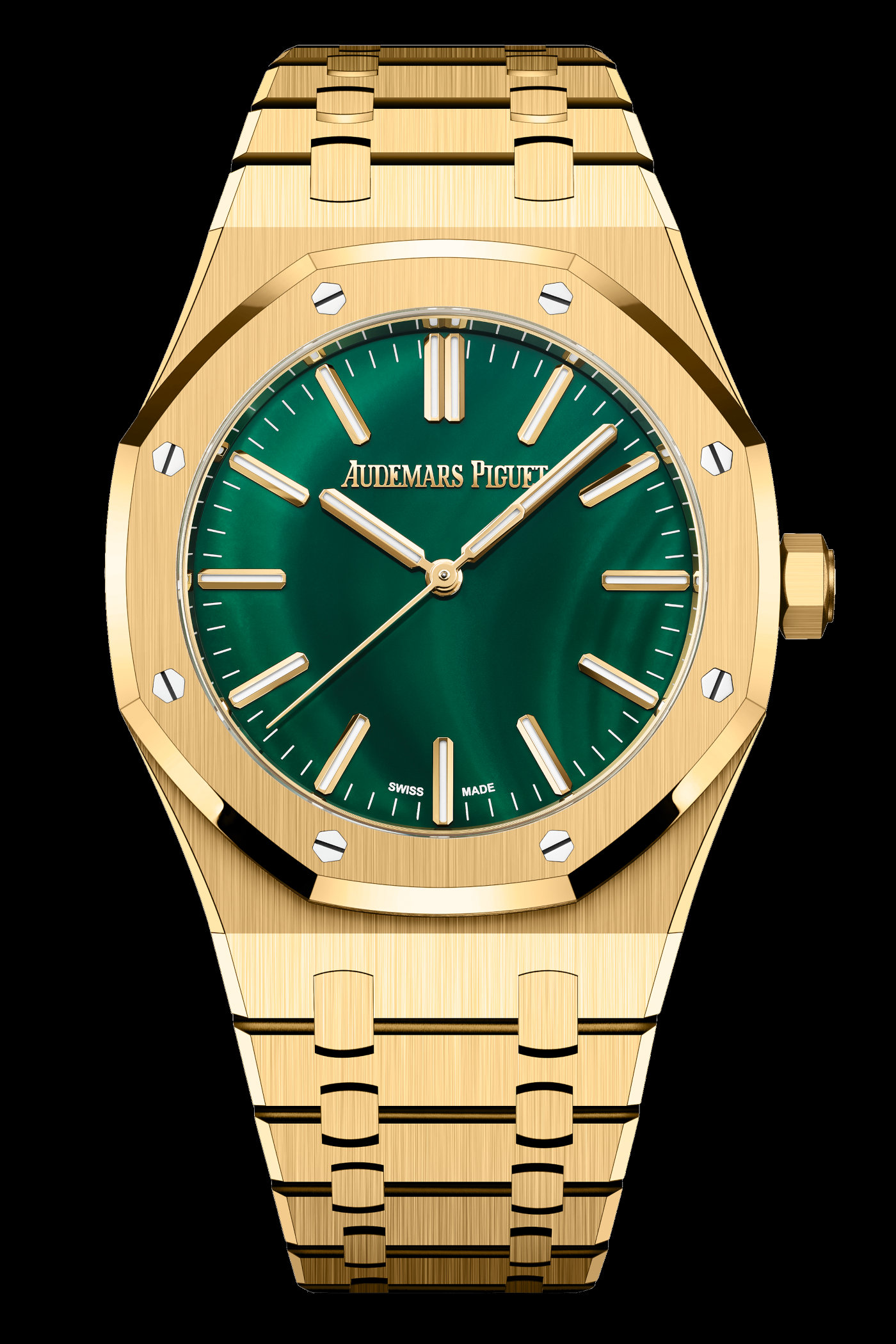
Audemars Piguet’s headline story at the fair wasn’t a watch, it was a philosophy. The brand launched the Atelier des Établisseurs, a dedicated workshop reviving the établissage system: the way Swiss watchmaking originally worked, where a single master craftsman would source parts from specialists and assemble an entire watch by hand from start to finish. Three pieces were shown to illustrate what this means in practice. The Galets is a 31mm yellow gold watch with an organic pebble-shaped case and a natural stone dial, five unique variations, each made by one artisan. The Nomade is a portable clock-watch hybrid with a movement skeletonised entirely by hand using a hacksaw, one of the slowest and most demanding methods possible. And then there is the Peacock: a secret watch that closes to show a hand-engraved beetle in white gold, and opens at the press of a button to reveal a full preening peacock, gemstone eyes, hand-engraved wings, a translucent enamel dial behind. Three exist, with deliveries in 2027. Alongside these, AP also showed a new Royal Oak in yellow gold with a malachite stone dial, the banded green crystallization of natural malachite making every dial completely unique, and the yellow gold and green combination producing something simultaneously ancient and startlingly modern. From $81,900.
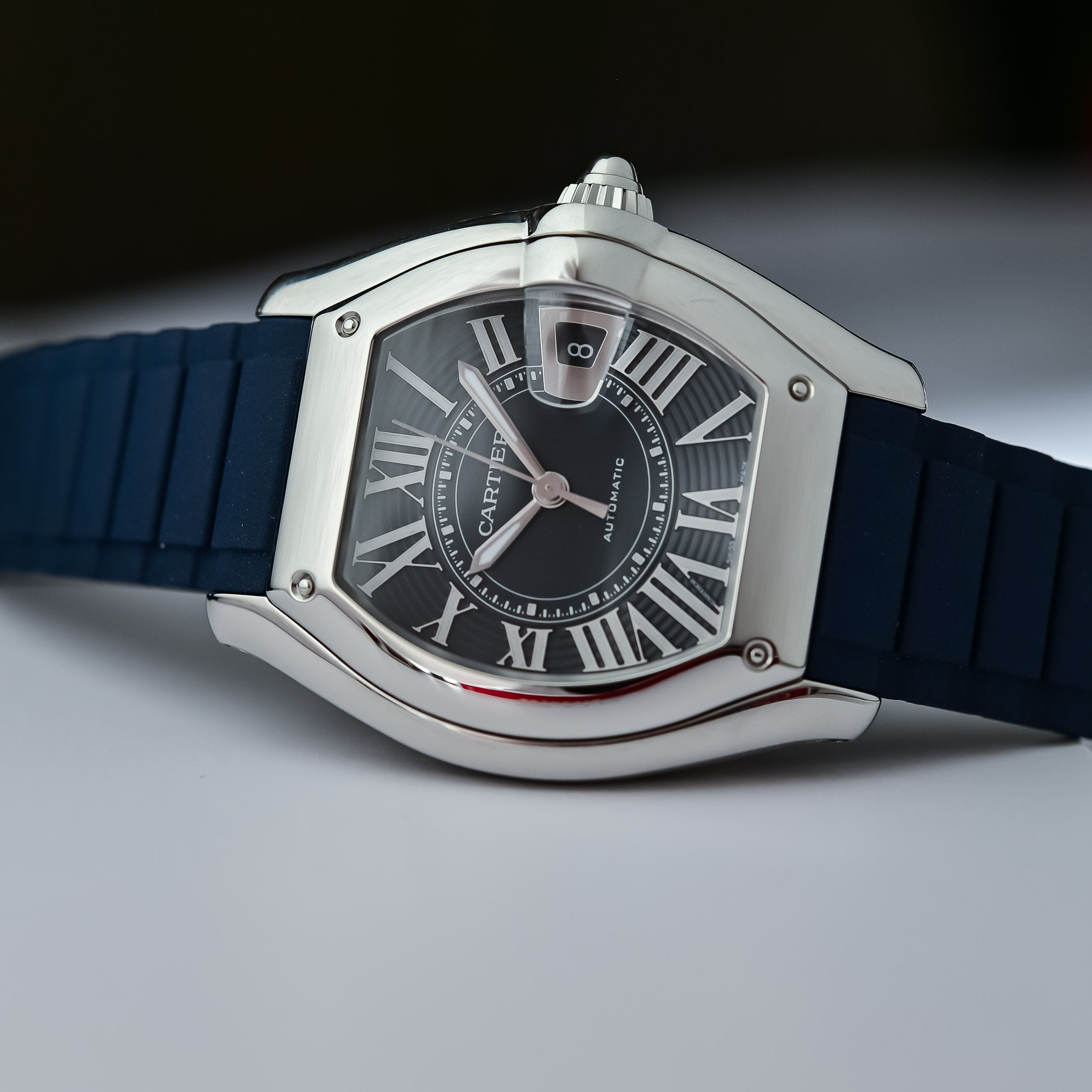
Cartier had the most emotionally satisfying announcement of the week: the return of the Roadster, which had been discontinued around 2012 and quietly mourned by collectors ever since. It’s a tonneau-shaped watch, barrel-shaped case, with automotive references woven into every element: the crown sits integrated into the case body like a gear lever, the dial carries a racetrack-style minute ring, the proportions suggest speed even at rest. More than 100 artisans worked on the redesign, refining the case and introducing a QuickSwitch bracelet system for effortless strap changes. The result is the original, clarified. It comes in steel, two-tone, and yellow gold across two sizes, from around €7,600 in steel, making it one of the most accessible genuinely interesting watches at the fair. At the other end of the spectrum, Cartier also showed a Panthère Métiers d’Art with a champlevé-enamelled panther tableau on the dial, cells carved directly into the metal, filled with enamel, fired, hand-polished repeatedly, limited to 100 pieces in each metal. The two pieces together are a precise summary of what Cartier is: a house that can make something magnificent for €7,600 and something irreplaceable in the same season.
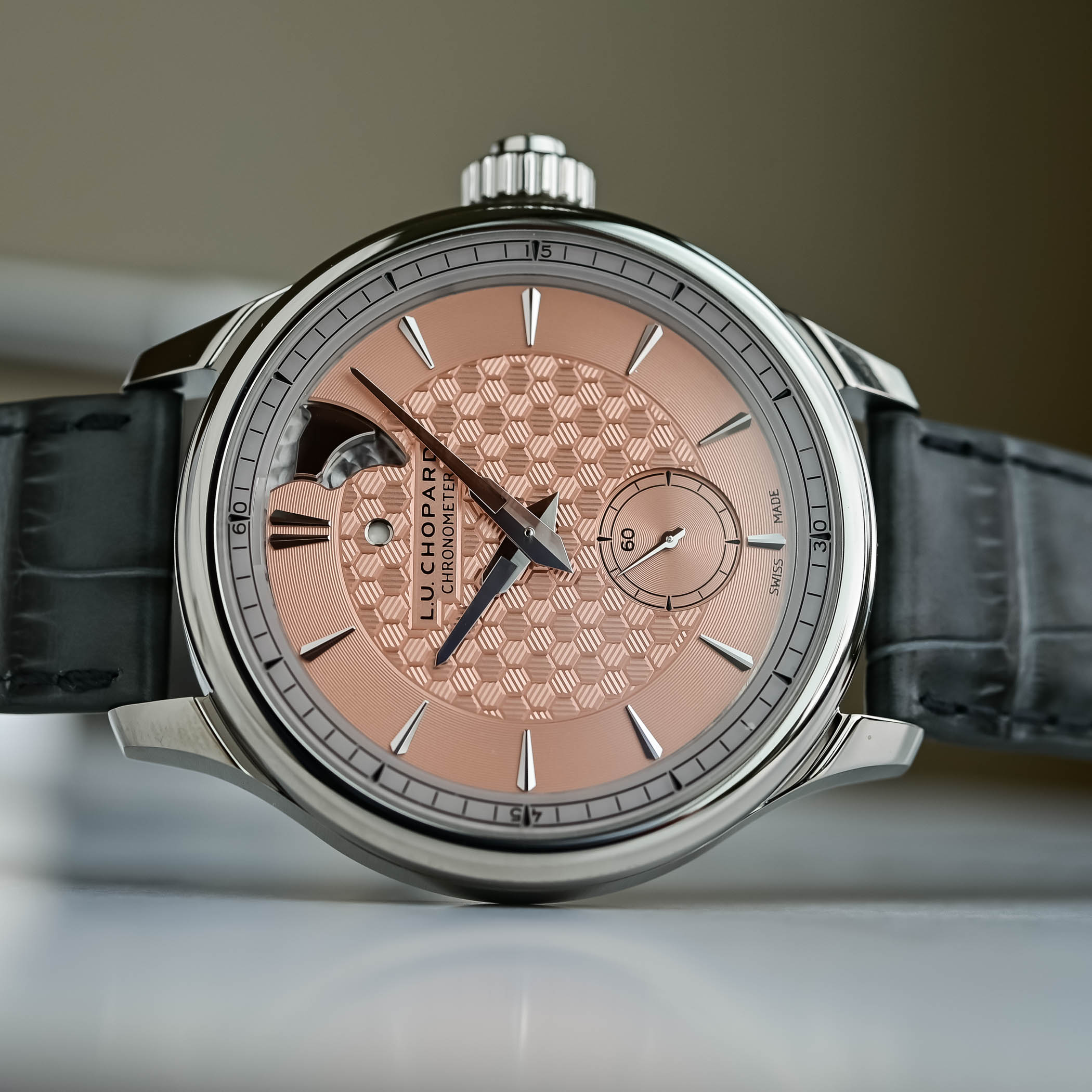
Chopard’s Fleurier Manufacture turned 30 this year, and they celebrated by showing what three decades of in-house development actually looks like. The most technically fascinating piece was the L.U.C Strike One in titanium with a salmon dial. It’s a watch that chimes the hour, every 60 minutes, a single clear note rings out from a monobloc sapphire crystal gong hidden inside the case. The challenge with titanium is that the metal naturally dampens sound, which is why you don’t usually find chiming watches in titanium. Chopard solved it by acoustically isolating the sapphire gong from the case entirely, so the titanium has nothing to absorb. The salmon guilloché dial is exquisite, and the watch is the lightest striking watch they’ve ever made. CHF 55,000. But the piece that may be remembered longest was the L.U.C Quattro Spirit 25 with a straw marquetry dial: a manually wound watch with an 8-day power reserve and a jumping hour, its dial made from hand-cut hexagonal pieces of Burgundy rye straw assembled into a honeycomb pattern in natural amber tones, no dye, no lacquer, just the straw. The technique is centuries old; it was practised in 18th-century France, revived here on a mechanical dial that took more time to make than most watches take to design. Eight pieces, at $80,800 each. It is the kind of object that makes you reconsider what a watch dial is for.
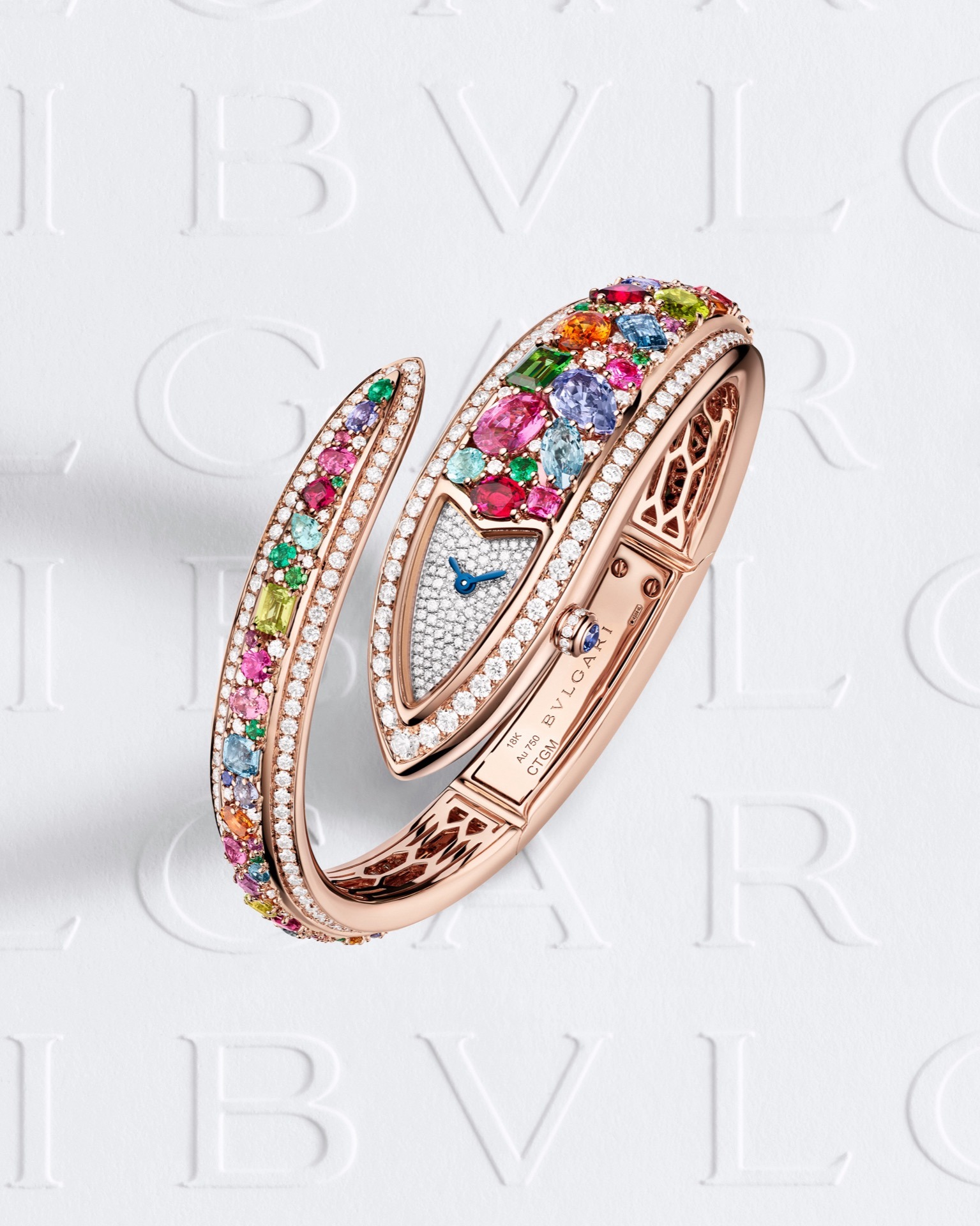
Then there was Bvlgari, who operate in a register entirely their own. Their theme this year was Gold & Steel, and they used it to revive one of the most iconic things in their archive: the Serpenti Tubogas Studs, a coiled bracelet-watch fusing the hypnotic Tubogas spiral technique with pyramidal “clou” studs drawn from the Maison’s 1970s jewellery archives, now with hardstone dials in carnelian, sodalite, and malachite, a deep red, a midnight blue, a vivid green. There is something genuinely Roman about these pieces, something ancient and a little dangerous, which is precisely the point of the Serpenti. The high point, though, was the Serpenti Aeterna in its new high-jewelry version: a 24mm rose gold watch with 5 carats of diamonds on the dial and 13 carats of coloured stones on the bracelet, rubellite, tanzanite, Paraiba tourmaline, tsavorite, emerald, amethyst, and more, assembled through 225 hours of development time, most of it selecting, preparing, and setting individual stones by hand. It is not a watch you check the time on. It is an object you wear because nothing else quite reaches that specific register of beauty, and because some things are worth making simply because they can be made. Bvlgari also released the first ever plain yellow gold Serpenti Aeterna, no gems, just the snake in gold, which means, for the first time, this sculpture is available as something close to a daily object rather than a vault piece.
Step back from the individual pieces and a few clear themes run through the whole fair. Stone dials were everywhere, malachite, sodalite, aventurine, jasper, carnelian, a continuation of the appetite for natural materials and colour that’s been building for years, and a sharp break from the uniform brushed-metal dials that dominated the last decade. Case sizes are shrinking: the new consensus is settling around 36–39mm for men’s watches, a real shift from the 40–44mm era. Chronographs dominated new releases across almost every brand, with serious technical development rather than cosmetic updates. And the market underneath all of it is healthier than it’s been since the pandemic bubble burst, pre-owned prices have steadily recovered, the speculators have largely moved on, and what’s driving demand is once again people who want to wear the things rather than flip them. If you’ve been curious about watches but found the last few years too noisy to make sense of, this is a good moment to start paying attention.
Watches and Wonders 2026 was held at Palexpo, Geneva, 14–20 April 2026. All prices are approximate retail at time of release and may vary by market.
Sources: Monochrome Watches, All New Rolex 2026 / Rolex Yacht-Master II 2026 / Patek Philippe Fox and the Crow / Patek Nautilus 50th Anniversary / JLC Gyrotourbillon à Stratosphère / JLC Minute Repeater Tourbillon / Cartier Roadster 2026 / AP Atelier des Établisseurs / Chopard L.U.C Strike One / Chopard Quattro Spirit 25 / Bvlgari at W&W 2026 / Robb Report, Patek Philippe W&W 2026