
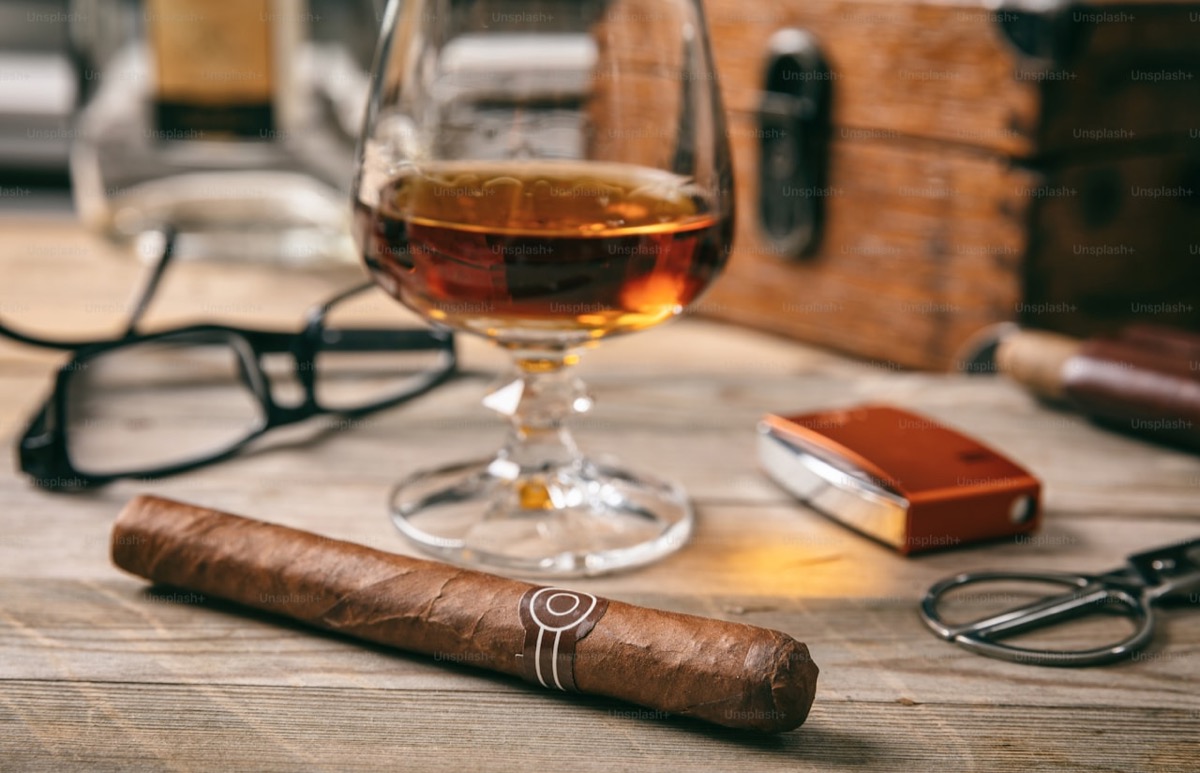

People either love it or hate it. But few rituals carry quite the same weight of occasion as a well-chosen cigar lit at the right moment. Thanks in part to a cultural rehabilitation that has been quietly underway for some decades, the cigar has shed its image as the exclusive property of oak-panelled boardrooms and dusty gentlemen’s clubs. Jean-Christophe Hollay, vice-president of Davidoff, has noted that “men are often offered cigars while women are overlooked” at exactly the moments when cigars are being passed around. Davidoff’s response was to organise an exclusive masterclass for women: a recognition that the pleasure belongs to anyone willing to learn it properly.
And learning it properly is the point. Unlike a cigarette, which asks almost nothing of the person smoking it, a cigar comes with what aficionados describe as a complete lexicon of do’s and don’ts. Technique matters. It matters in the cutting, in the lighting, in the pace of the smoke. Get it wrong and the experience falls apart. Get it right and you understand immediately why people have been doing this for centuries.
The cut comes first. Moisten the cap lightly with your lips, then trim approximately 70 percent of it away with a clean, sharp cut. A blunt or hesitant cut frays the wrapper and compromises the draw before you have even begun. The lighter matters too: a gas lighter or a wooden match, cedar wood being the traditional preference, both work well. Hold the foot of the cigar at roughly 45 degrees above the flame, rotating it gently until it glows evenly around the edges. Do not rush this. The toast, as it is called, sets the foundation for everything that follows.
Once lit, take small, unhurried draws and allow the smoke to rest in your mouth before exhaling. The cardinal rule: do not inhale. A cigar is not a cigarette and should not be treated as one. The flavour lives in the mouth, not the lungs, and the smoke carries with it a complexity of notes that changes as the cigar burns down. The ash, contrary to instinct, should be allowed to accumulate rather than flicked away at every opportunity. A long, intact ash preserves the temperature of the burn and protects the aroma. When the moment comes to finish, simply rest the cigar in an ashtray and let it extinguish itself. Crushing it out releases compounds that linger unpleasantly in the air. The graceful exit, as with most things, involves knowing when to stop and then stopping without ceremony.
As for what to drink alongside it: whisky is the classic pairing, its own complexity running a pleasant counterpoint to the smoke. Port works beautifully, particularly with fuller-bodied cigars. A good wine is not out of place either. The principle is simply that something with enough character to hold its own deserves something with enough character to match it.